
| Uploader: | Bagrel |
| Date Added: | 14 June 2010 |
| File Size: | 17.54 Mb |
| Operating Systems: | Windows NT/2000/XP/2003/2003/7/8/10 MacOS 10/X |
| Downloads: | 83197 |
| Price: | Free* [*Free Regsitration Required] |

Best performer in the class; stable; highly tweakable Cons: And all the while, it was smi, with nary a crash nor glitch in sight. The performance of this board was pretty much on a par with the other motherboards. Stable, onboard DVI Cons: Being an Intel board, there are no options for tweaking memory or altering clock rate.
Heir To The BX: 18 Pentium III Motherboards Using The Chipset -
Performance was unremarkable, and getting even reasonable performance proved to be quite a chore. Stable, clean layout, good performance in Windows 9x. Intel is prepping an update to the for the Tualitin. The E series supports the standard 66, and MHz frontside bus speeds by default, though some motherboard manufacturers allow for alternative Proo speeds.
An array of four LEDs gives additional diagnostic information during system boot to aid in troubleshooting. For example, even a simple streaming test like the one used in Audio Winbench shows a doubling of CPU utilization.

The printed circuit board PCB layout is relatively clean, and there were no visible patches or wire jumpers. No tweaks available; finicky about PC memory Rating: Layout a bit awkward Rating: Like most non-Intel boards these days, you can manually change memory timing, frontside bus speed and core voltage.
Note that audio and LAN functionality are really software driven, so expect to use some processor cycles if you go with pure ICH2 solutions. In the other setting, you can tweak from — MHz. On the other hand, motherboards are relatively inexpensive, so you can start with a modest budget and move up later.
Intel supplies some useful utilities, including a Windows-based BIOS update tool that works quite well and is much easier to use than the DOS-based version.
List of Socket 370 motherboards
One interesting feature of this Intel board is the presence of a DVI connector directly on the motherboard. All of the prl were fairly close in most of the tests. However, we deactivated both onboard audio and networking for our performance testing.
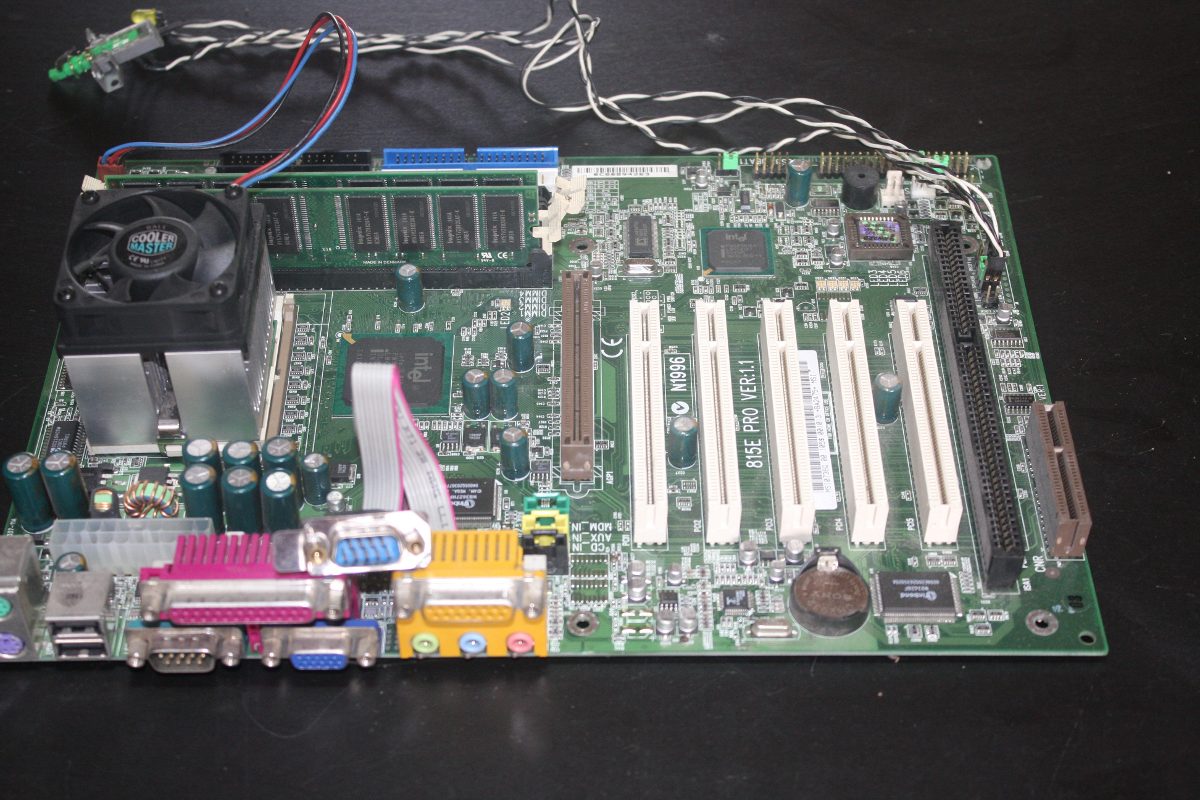
There are several versions of the D; the one we tested included built-in Ethernet and AC97 audio. The layout of this board is clean and there were no potentially serious installation problems. Gamers and performance addicts should definitely steer away from this one, due to its lack of tweakability and fussiness about memory.
The i graphics core is a capable 2D core, though with extremely limited 3D capability. In raw scores, the EP Pro came in second, but the overall differences were too minor to be considered relevant. There are four DIMM sockets, giving the user some flexibility in memory installation. As befits an Intel board, the layout is clean and conservative. Like many modern motherboards, you set the clock rate in the system BIOS.
After installing the Micron RAM, the DEEA performance proved to be on par with the other boards, although the memory bandwidth scores lagged a tad.
Still only an board Rating: In the end, the EP Pro is a solid, stable performer.
The Ethernet simply uses the built-in soft networking capabilities of the ICH2 chip, and the connection to the outside world is made with a discrete Intel-manufactured phy physical layer chip. Intel manufactures the motherboards for several large PC manufacturers, including Dell and Gateway.
The integrated DVI connector allows system builders to configure very compact systems with digital flat panel monitors for applications such as small kiosks in public locations.
In the end, this motherboard is a decent solution for system integrators and white box shops that value stability and Intel support above performance and msinboard.
Comments
Post a Comment